Skip to Content

ULTRA-xr Markes International

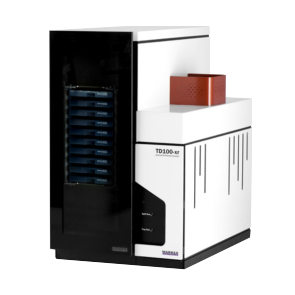
100-tube autosampler for unattended high-throughput thermal desorption analysis.

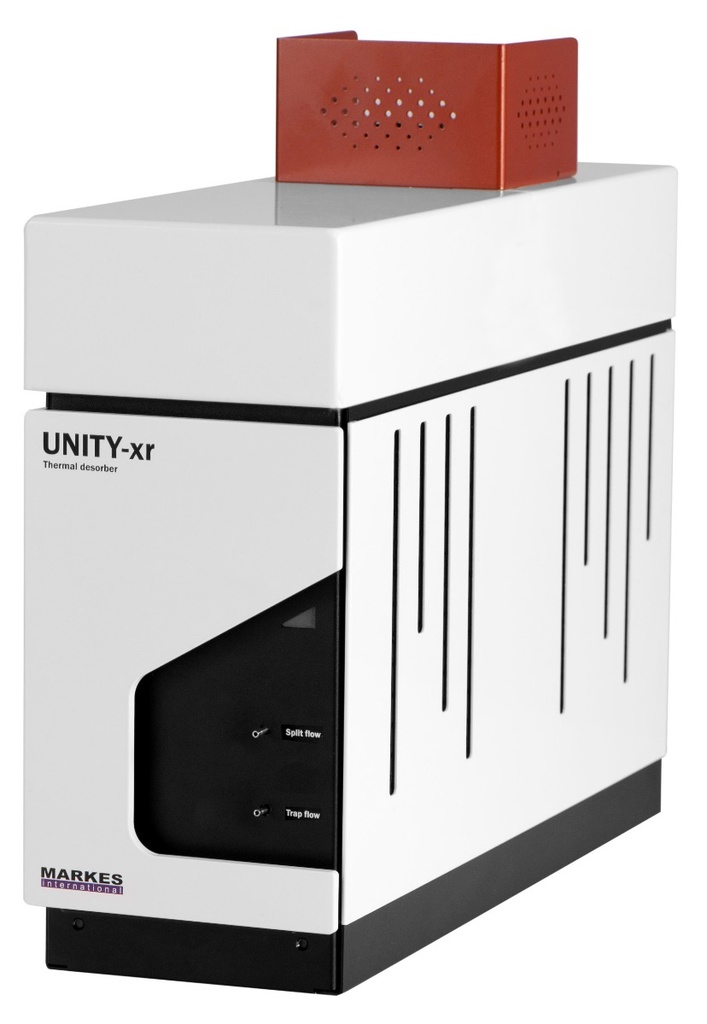
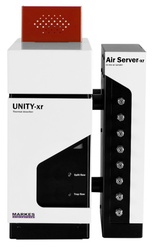
ULTRA-xr™ is a high-throughput autosampler that adds to the UNITY-xr thermal desorption unit, for the rapid and unattended analysis of VOCs and SVOCs from up to 100 sample sorbent tubes in a single sequence.

ULTRA-xr is ideal for analytical laboratories wishing to upgrade their existing UNITY-xr system to process multiple sample tubes efficiently, or upgrade their ability to re-collect split samples.

Product benefits

• Enhance throughput – with capacity for up to 100 tubes and all the performance advantages of UNITY-xr, you can generate reliable data all weekend.

• Peace of mind – by automating sample re-collection for repeat analysis, ULTRA-xr offers simple method/data validation and overcomes the ‘one-shot’ limitation of other systems.

• Future-proof your lab – ULTRA–UNITY-xr systems are compatible with on-line and canister automation – allowing you to expand as the needs of your lab grow.

• Save time and money – free-up your laboratory staff with robust automation for your world-leading UNITY-xr thermal desorber.

Features

• Automated, cryogen-free, unattended operation for up to 100 sample tubes.

• Confidence in results through quantitative sample re-collection of split flows.

• Robust design accommodates standard 3½″ sample tubes.

• Compatibility with a variety of analytes over a wide concentration range makes the UNITY–ULTRA-xr ideal for most TD–GC–MS applications.

• Method compliance aided by leak-testing, water management and addition of internal standard.

• Enhanced traceability of samples using barcodes and RFID TubeTAGs.

• High-precision parts result in increased robustness.
TD40.Direct desorption of VOCs and SVOCs from leather furnishings.pdf TD33.Analysis of the interior atmosphere of a passenger car by TD-GC-MS.pdf TD14.Monitoring labile, high-boiling organic vapours such as those found in -clean room air- in semi-conductor fabrication plants.pdf TD28.Optimising Analytical Performance and Extending the application range of thermal desorption for monitoring air indoors and inside vehicle cabins.pdf TD56.TD-GC-MS analysis of VOCs for material emissions testing.pdf TD55.Using the FLEC to determine emissions of VOCs from materials and products.pdf TD57.Characterisation of paint samples by direct desorption TD-GC-MS.pdf TD59.Direct desorption of car trim materials for VOC and SVOC analysis in avvordance whit VDA method 278.pdf TD62.Materials emissions testing in the semiconductor and electronics industries.pdf TD65.Automating the measurement of VOCs ans SVOCs in materials using direct thermal desorption.pdf TD66.Improving the identification and measurement of trace odorous and toxic compnents during material emissions testing.pdf TD67.Introducing the Micro-Chamber-Thermal Extractor for rapuid emissions screening of products and materials.pdf TD70.Materials emissions testing using the FLEC® Cell, testing recovery and sink effects.pdf TD69.Correlation of emission rates determined using the Micro.Chamber-Thermal Extractor whit those for conventional emission-chamber tests.pdf TD68.Using Markes emission screening technology to simplicity compliance whit construction product regulations.pdf TD71.Summary of FLEC Applications.pdf TD72.An Introduction to Emission Cells and comparison to small chambers for material emissions testing.pdf TD73.The performance of Markes Micro-chamber- Thermal Extractor for low-cost, fast and meaningful material emissions screening.pdf TD89.Thermal desorption technology for testing chemical emissions from construction products and consumer goods.pdf TD90.Automated detection of trace target compounds in complex chemical emission profiles from products and materials.pdf TD93.Rapid microchamber tests for screening chemical emissiond from car trim in accordance with ISO 12219-3.pdf TD74.The suitability of emission cells for emissions testing and a comparison with samll chambers.pdf TD103.Enhancing the development of low-emitting products and materials.pdf

TD3.National and international standard methods relating to speciated monitoring of vapour-phase organic compounds in air.pdf TD5.Advice on sorbent selection, tube conditioning, tube storage and air sampling.pdf TD15.On-line process control of speciated organic chemicals in industrial gases at sub-ppb levels.pdf TD18.Developments in the determination of nitrous oxide using TD-GC.pdf TD16.Round-the-clock, on-line and cryogen-free monitoring of hydrocarbons from acetylene to trimethylbenzene in ambient air.pdf TD32.The analysis of sulfur compounds using on-line and off-line TD-GC.pdf TD29.VOC air monitoring technology and its application to contamined land.pdf TD35.Thermal desorption of dioctyl phthalate and other plasticisers.pdf TD27.A review of sorbent-based sampling methods for VOCs and SVOCs in air.pdf TD38.Occupational Exposure Limit Levels for VOCs compatible whit TD-GC.pdf TD37.Workplace Air Monitoring using Pumped sampling onto sorbent tubes and analysis by TD-GC-MS.pdf TD46B.Monitoring organic vapours in air – A comparison of thermal desorption and carbon disulfide(CS2) extraction.pdf TD46.Monitoring organic vapours in air – A comparison of.pdf TD53.Quantitative recovery and method validation of high-boiling SVOCs using TD-GC-MS.pdf TD47.The Analysis of Landfill Gas Compounds using TD-GC-MS.pdf TD49Fenceline and ambient monitoring of benzene and other hydrocarbons using diffusive samping and TD analysis.pdf TD77.Using Thermal Desorption for Industrial (Stack) emissions testing.pdf TD81.Analysis of canister air samples using cryogenfree thermal desorption in compliance with US EPA method TO-15.pdf TD80.Evaluation of a ‘Soil Gas’ sorbent tube for improving the measurement of volatile and semivolatile fuel vapors in contamined lan.pdf TD86.Monitoring 'air toxics' in ambient air using sorbent tubes by automated, cryogen-free thermal desorption on accordance with US EPA method TO-17.pdf TD87.A cryogen-free method for monitoring trace greenhouse gases in air.pdf TD97.Analysis of polycyclic aromatic hydrocarbons from vehicle exhaust using TD-GC-MS.pdf TD99.Using the CIA Advantage for automated cryogenfree analysis of canister air and gas.pdf TD102.Investigation of the performance of sorptive extraction cartbrige for air monitoring.pdf

TD2.Prediction of uptake rates for diffusive tubes.pdf TD1.Uptake rates for tube-type axial diffusive samplers.pdf TD6.Common problems with thermal desorption and how to solve them.pdf TD4.Publications and presentations citing Markes’ products.pdf TD7.Calibration, Preparing and introducing thermal desorption standards using sorbent tubes.pdf TD8.Principles of diffusive monitoring.pdf TD10.Use of diffusive samplers with TD–GC analysis for monitoring VOCs in ambient air.pdf TD9.Monitoring materials and processes for VOCs at high and trace levels.pdf TD17.The GC-FID sensitivity of the UNITY thermal desorber.pdf TD13.Evaluation of the Bio-VOC- a low-cost, simple device for biological monitoring of VOCs in breath.pdf TD19.Minimising artefacts – Considerations for storage and transport of sorbent tubes.pdf TD20.Confirming sorbent tube retention volumes and checking for analyte breakthrough.pdf TD21.Developing and optimising TD methods.pdf TD22.Selection of gas flows and split ratios during thermal desorption.pdf TD24.Overcoming the ‘one-shot’ limitation of thermal desorption by the re-collection of desobed samples.pdf TD25.Calculating atmospheric concentrations from analyte masses retained on sorbent tubes.pdf TD26.Minimising analytical interference from water during the analysis of sorbent tubes.pdf TD30.Certified Reference Materials for Analysis of VOCs in air by TD-GC.pdf TD35.Thermal desorption of dioctyl phthalate and other plasticisers.pdf TD12.Analytical thermal desorption, History, technical aspects and application range.pdf TD60.The complementary role of thermal desorption and other sample introduction technologies fo GC.pdf TD42.Uptake rates for radial diffusive samplers.pdf TD61.Diffusion-locking technology.pdf TD75.Liquid standard injection, tube impedance and other factors that may cause discrimination during the calibration of TD methods.pdf TD64.Simultaneous TD-GC(-MS) analysis of VOCs and SVOCs.pdf TD79.Air monitoring - the respective advantages and applications of canisters and tubes.pdf TD85.GC-MS data analysis using ClearView™ background compensation software,dealing with common ions.pdf TD82.TubeTAG™ - Enhanced tracking of sampleand and tube-related infromation for thermal desorption.pdf TD83.Using ClearView background compensation software to enhance GC-MS methods for trace compound analysis.pdf